FinFlowAI-Powered Personal Finance App
A concept project exploring how emotional design and AI can turn financial anxiety into calm, confident decision-making.
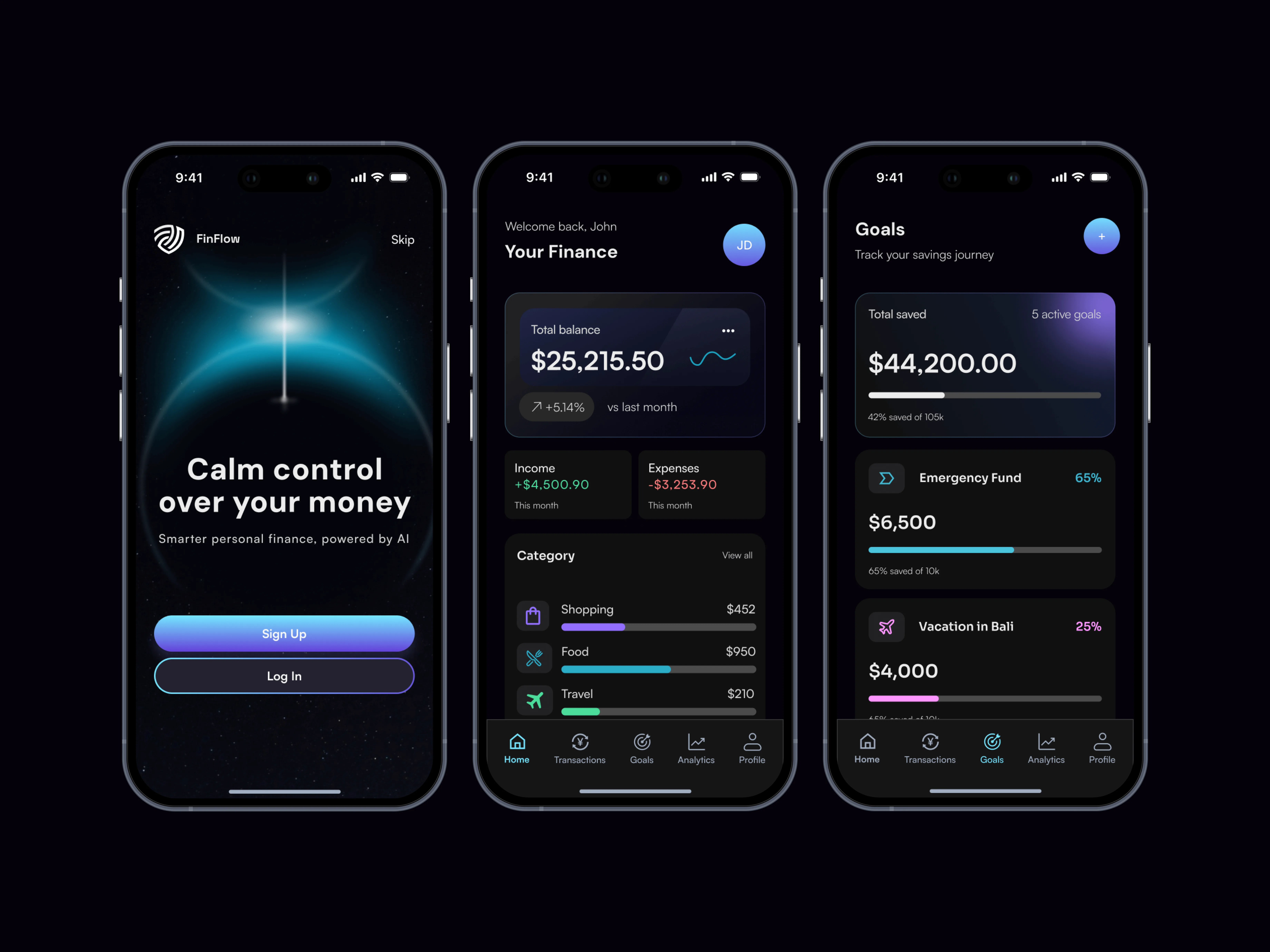
Most finance apps treat money as a data problem — more charts, more numbers, more tracking. FinFlow started from a different assumption: the problem isn't lack of data, it's the anxiety that comes with it.
This is a self-initiated concept exploring how visual language and AI-powered insights can make users feel in control of their finances — not overwhelmed by them.
Designing for emotion, not just functionality.
Traditional finance apps feel clinical. Users open them to check a balance and leave feeling stressed. The challenge was twofold: create an interface serious enough to trust with real money, yet calm enough to open daily without dread.
Every AI touchpoint needed to feel like a helpful nudge, not a warning.
Calm before information
Deep dark backgrounds, soft gradients, and generous spacing create stability before the user reads a single number. The onboarding — 'Calm control over your money' — sets the emotional tone for every screen that follows.
One number at a time
The home screen surfaces one primary metric: total balance. Everything else requires a scroll — intentionally. Showing everything at once creates overload. Showing one thing at a time creates focus.
Goals as progress, not deficit
Most apps frame savings negatively: 'You're $5,800 short.' FinFlow reframes it: '65% saved.' Same data, opposite emotional effect. Users leave feeling ahead, not behind.
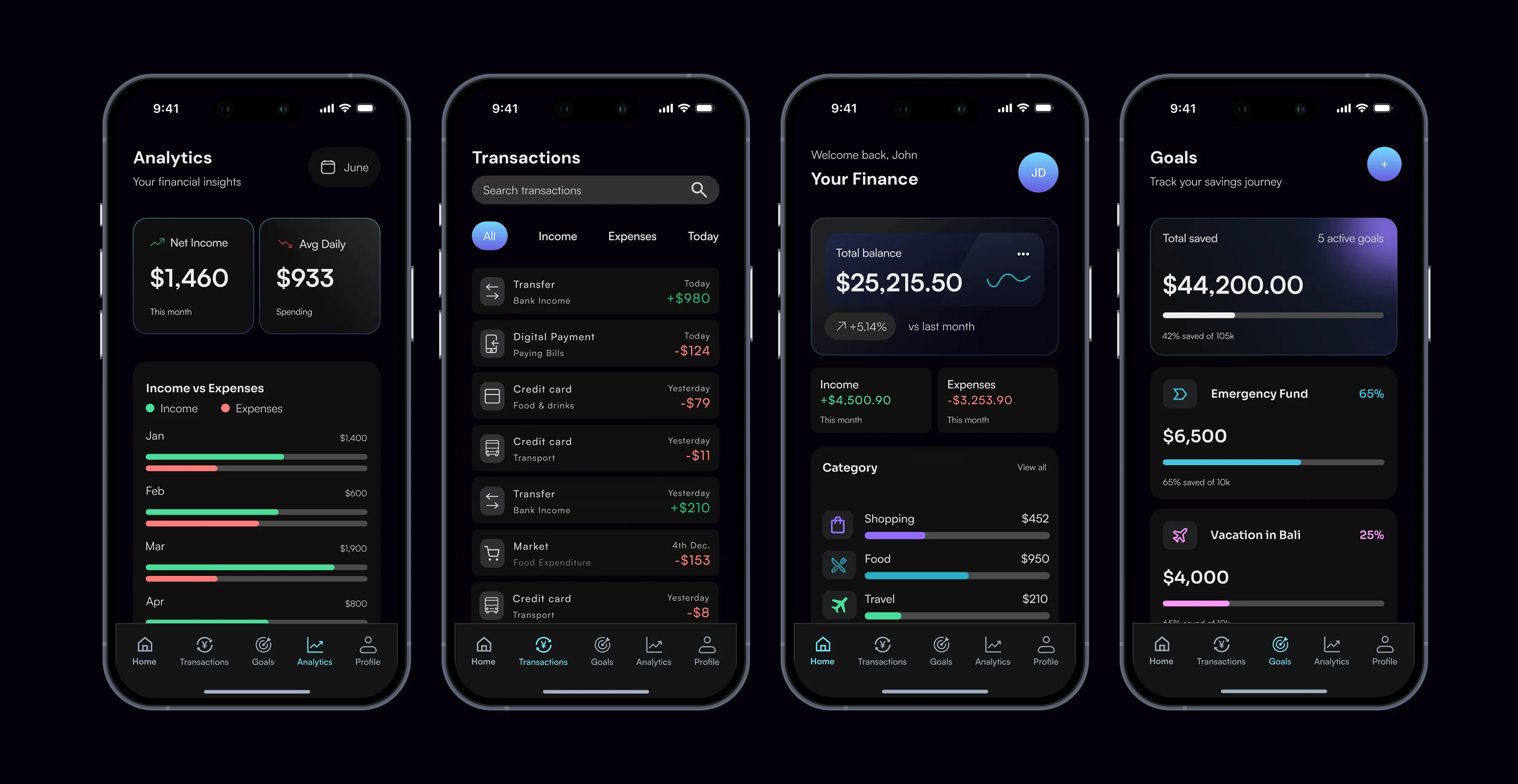
The hardest decision was restraint — every screen got better when I removed something.
Designing for emotional states, not just tasks, changes every decision: from typography weight to how progress is framed. A finance app that feels calm is a product decision, not just an aesthetic one.
If this were a real product, the next step would be testing the AI insight feature: do users find proactive nudges helpful or intrusive? That's the core UX risk in any AI-powered finance app.